

You set a timer, drain the pot when it rings, and take a bite. The rim is already soft and sticky, but the middle still feels chalky. Dried orecchiette can be stubborn that way: its little cup doesn't cook at the same pace as its thin edge, so the package time alone can't tell you when every piece is ready.
A more reliable approach is to understand the shape, then taste for doneness as the pasta cooks. You'll learn what dried orecchiette is, why its cup affects cooking and sauce, how to spot the difference between undercooked and al dente, and how to buy and store it. The aim is a repeatable kitchen judgment, not one universal cooking time.
Table of Contents
- The Shape Behind the Little Ears
- What Dried Orecchiette Actually Is
- Why the Cup Changes How It Cooks
- A Repeatable Doneness Test for Orecchiette
- Sauces That Fit the Shape
- Finishing the Sauce with Pasta Water
- How to Buy Dried Orecchiette Well
- Storage and Quick Answers
The Shape Behind the Little Ears
Orecchiette is easy to recognize once you know what to look for: small pieces of pasta shaped like shallow ears or cups. But the shape also explains a familiar kitchen frustration. The narrow rim may turn tender while the thicker center still resists a bite. If you drain the pot just because the timer rang, you can end up with two textures in the same piece.
That doesn't mean the package instructions are useless. Treat the stated cooking time as a starting point, then begin tasting before you expect the pasta to be done. A piece of orecchiette tells you more than a timer can, especially when you bite through its center rather than judging only the outside.
The cup is part of the appeal, too. It catches small pieces of vegetable, meat, or cheese, while the ridged interior gives sauce somewhere to cling. Once you understand how those parts work together, it's easier to choose an appropriate sauce and finish the dish without turning the pasta gummy.
Here, we'll work through the pasta's ingredients and regional roots, then look at why the rim and cup cook differently. From there, you'll get a tasting method, sauce pairings, a practical way to use cooking water, and buying and storage cues. The focus is technique and judgment, not chasing a single cook time.
What Dried Orecchiette Actually Is
The name orecchiette means “little ears,” a description of the small, concave pieces. Their rough interior isn't just a visual detail: it helps hold sauce. Think of each piece as a tiny scoop with a textured inside, rather than a smooth bead or a strand.
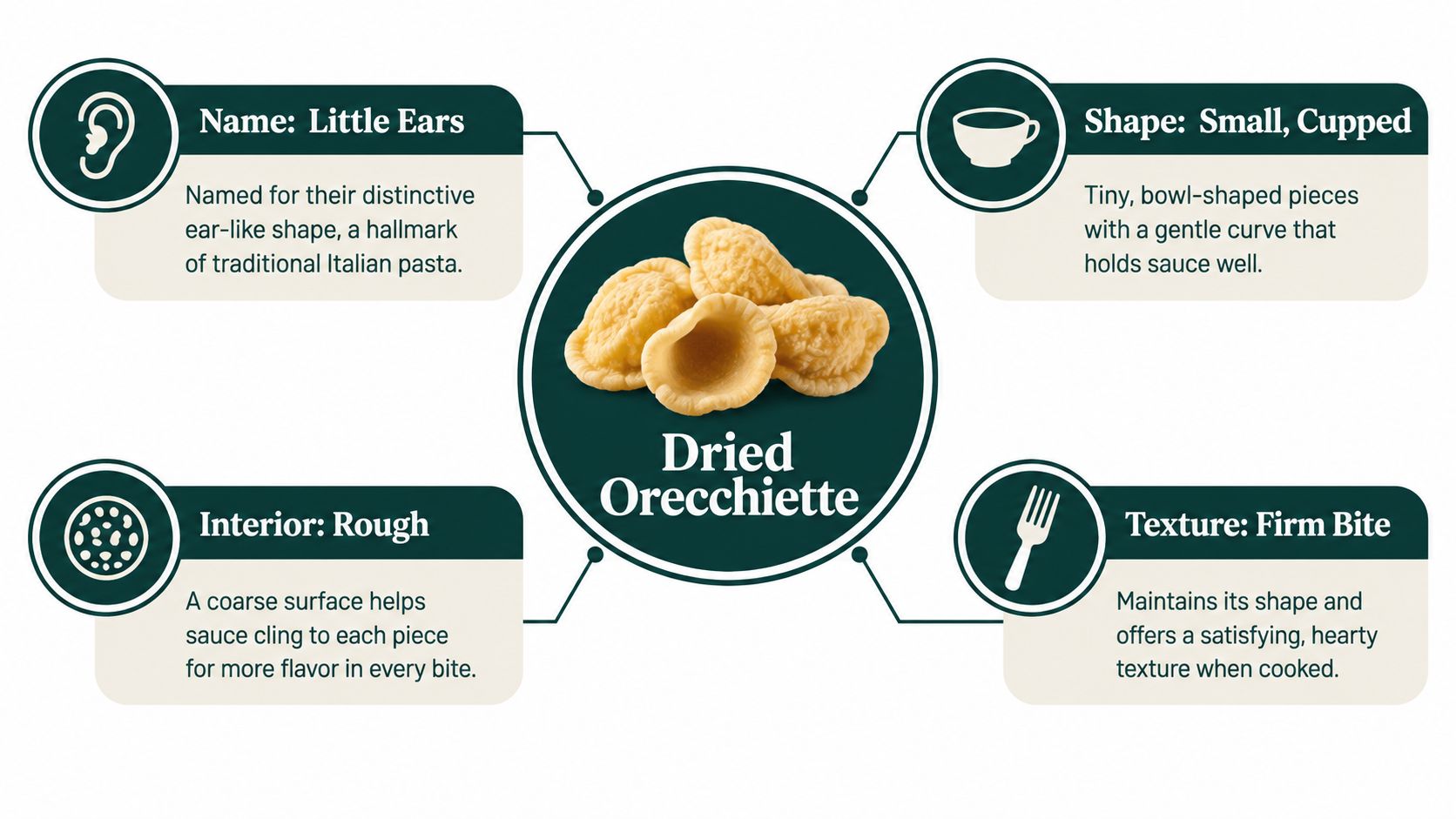
Traditional orecchiette dough is made with durum-wheat semolina and water, not eggs. That simple dough is associated with Puglia, especially the Bari area of southern Italy, and gives the pasta a firm, chewy character. It's a different tradition from many egg-pasta shapes associated with northern Italy.
Orecchiette has a long regional history. References place the pasta in Puglia by at least the 12th or 13th century, and a 16th-century manuscript referring to the dish is preserved in the archives of the Church of San Nicola in Bari (historical overview of orecchiette). Its exact origin remains debated. Some accounts connect the shape to local Puglian practices, while others suggest similar pasta arrived from southern France during the 13th-century Angevin period.
What matters for a home cook is the durable idea behind the pasta: semolina and water can be shaped into a substantial form, then dried for storage. Fresh Puglian orecchiette is shaped by hand, traditionally by cutting small pieces from a rope of dough and dragging each piece with a knife or thumb. Dried orecchiette pasta carries that recognizable cup into a shelf-stable form that's convenient for weeknight cooking.
Why the Cup Changes How It Cooks
Orecchiette isn't evenly thick from edge to center. Its rim is thin, while the cup is deeper and more substantial. Water and heat soften the outside first, so the edge can be tender before the center is fully hydrated. That's why one piece may feel gummy at the edge yet firm in the middle.
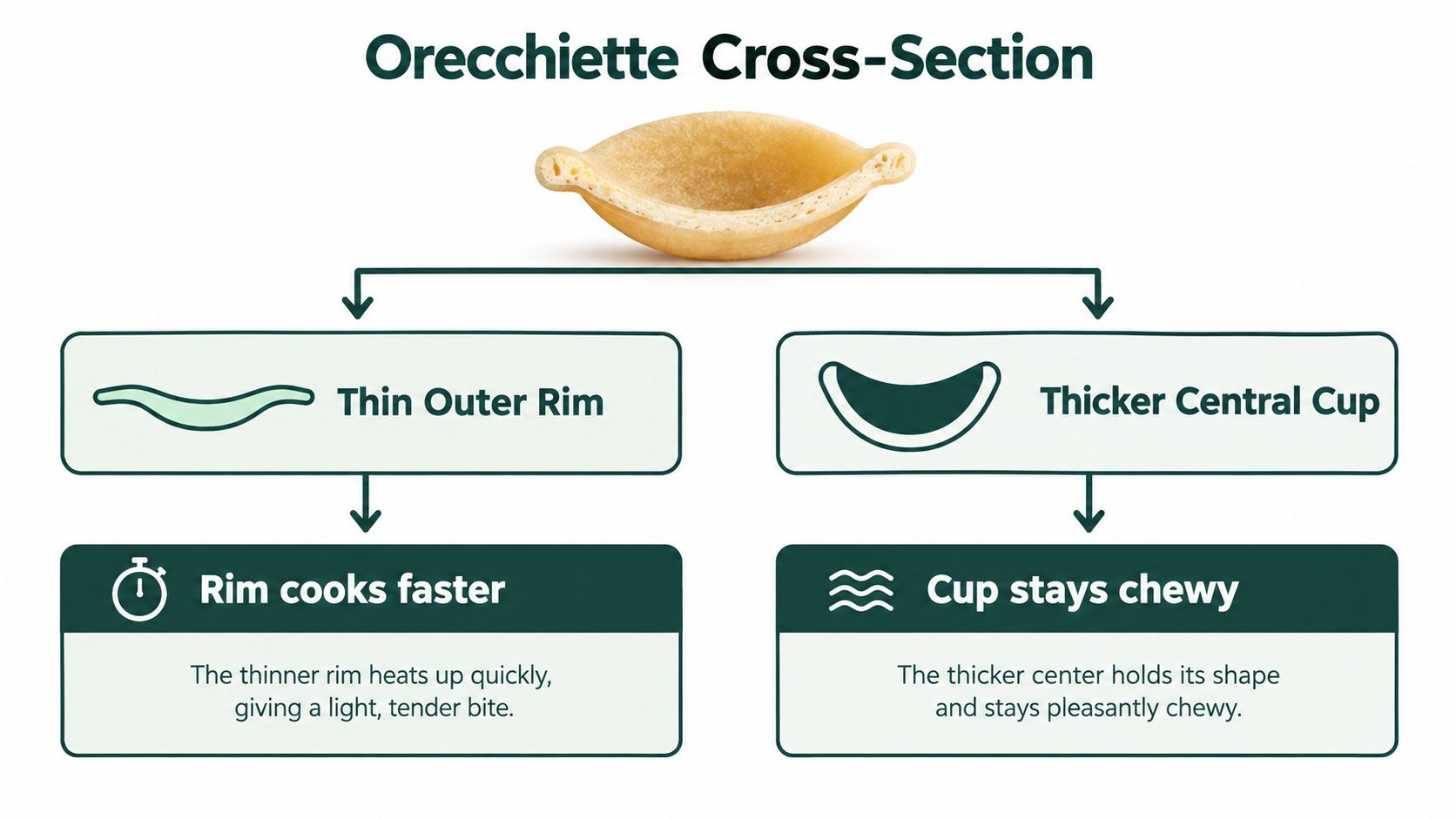
Durum wheat gives the pasta a protein structure that helps it keep its shape and chew. But once cooking continues past the right point, starch swells and the surface can become sticky. With a cupped shape, that change is easy to notice: the rim can lose definition while the center is still catching up.
Practical rule: Use the package time to decide when to start tasting, not when to drain.
Dried orecchiette is also part of a large, export-oriented pasta tradition. A U.S. Department of Agriculture report recorded 3.1 million metric tons of Italian dry-pasta production in 2006, with exports accounting for about 54.8% of that production (USDA report on Italy's durum-wheat and pasta market). That industry helps explain how a regional shape can also be a practical pantry food for cooks far from Puglia.
The shape, not just the grain, changes how you cook it. For a broader look at pasta forms and extrusion, see Lello's guide to egg pasta and bronze-die pasta.
A Repeatable Doneness Test for Orecchiette
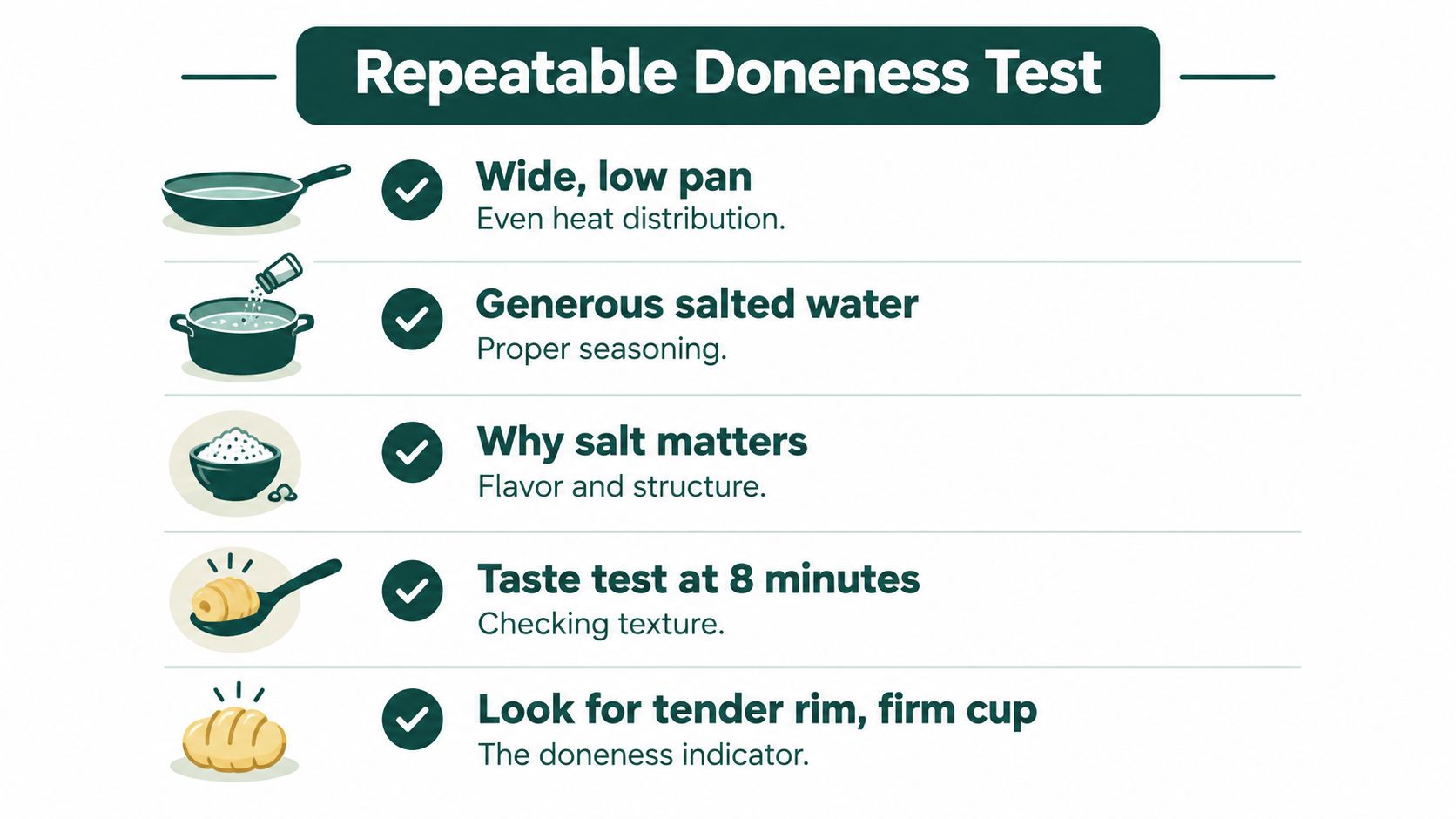
Start with a wide pot or low, broad pan and enough salted water for the pieces to move freely. Salt seasons the pasta, while water composition can also affect cooked hardness and adhesiveness. Stir shortly after adding the orecchiette, then stir again as it cooks. Small cups can settle together, and trapped hot water can soften their rims faster than you intend.
Use the package timing as a bracket. Begin tasting about one minute before the earliest time listed, and take a piece from the pot rather than guessing from its appearance. Bite through the cup and check the center.
Read the bite, not just the clock
- Chalky core: The center is dry, hard, or powdery. Keep cooking, then taste another piece shortly afterward.
- Resilient, hydrated bite: The pasta offers some spring, the center has no pale, chalky core, and the rim still holds its shape. That's the al dente target.
- Soft, sticky rim: The edge feels mushy or starts to collapse while the center no longer has pleasant resistance. The pasta has gone too far.
Watch the water and the shape as well. Cloudy water alone doesn't tell you the pasta is poor, but heavy cloudiness alongside a sticky surface can signal substantial starch release. A piece splitting along its curve may be fragile or unevenly hydrated. If the rim is soft but the center is hard, keep tasting and stirring; the unevenness may reflect the piece's thickness or the product's drying and cooking behavior. Research reviews note that drying conditions and the pasta's protein and starch structure affect firmness and cooking loss (review of pasta drying and quality).
Before draining, reserve some cooking water if you'll use it for the sauce. After draining, let the pasta rest briefly so moisture can settle through each piece. Don't leave it sitting in hot water: continued cooking softens the contrast between a tender rim and a resilient center.
Sauces That Fit the Shape
The rough interior and hollow cup make orecchiette a natural match for sauces with bits to catch. But the thin rim also needs enough liquid or oil to coat the pasta, so a sauce that's only large chunks can leave the edges dry. Match the sauce's texture to both parts of the shape.
| Sauce Family | Texture | Why It Works with Orecchiette |
|---|---|---|
| Olive oil and greens | Light, glossy, with small florets | Oil coats the rim; florets tuck into the cups. |
| Chunky vegetable | Tender vegetables in a loose sauce | The cup catches pieces while the sauce clings to the rough inside. |
| Slow-cooked meat | Rich, cohesive, and substantial | The cup holds small pieces of meat, and the sauce coats the outer surface. |
| Cheese emulsion | Silky and fluid, not stiff | A smooth coating reaches the inside of the cup without turning it pasty. |
A classic example is olive oil with bitter greens such as broccoli rabe. Small florets and tender leaves slip into the cups, while oil carries garlic and seasoning around the pasta. With a chunky tomato and eggplant sauce, the rim picks up the coating and the center catches a vegetable piece.
A slow-cooked meat sauce has more body, so it can cling to the ridged interior without relying on oil alone. For a lighter cheese-based pairing, the important goal is a fluid emulsion rather than a heavy coating. Lello's bacon, lemon, and Parmesan pasta idea is one example of combining salty, rich ingredients with brighter flavors.
A useful adjustment: cook the pasta a little less before adding it to a hot, heavy sauce, since it will finish in the pan. With a lighter sauce that won't continue cooking the pasta much, cook closer to the doneness you want on the plate.
Finishing the Sauce with Pasta Water
“Save some pasta water” is good advice, but it isn't a precise recipe. Cooking water can vary in starch concentration depending on the pasta and how it has cooked. It also carries salt, so adding it without tasting can make an already-seasoned sauce too salty. Food-science reporting notes that some dried pasta releases less starch than less premium or handmade pasta because starch is held more tightly within its protein structure (report on pasta and sauce science).
Before draining, scoop out a cup of cooking water. Start by adding a small splash to the pan of sauce, then add the orecchiette and toss. If the sauce still looks tight or doesn't coat the cup, add another splash. You're aiming for a sauce that clings, not a puddle at the bottom of the pan.
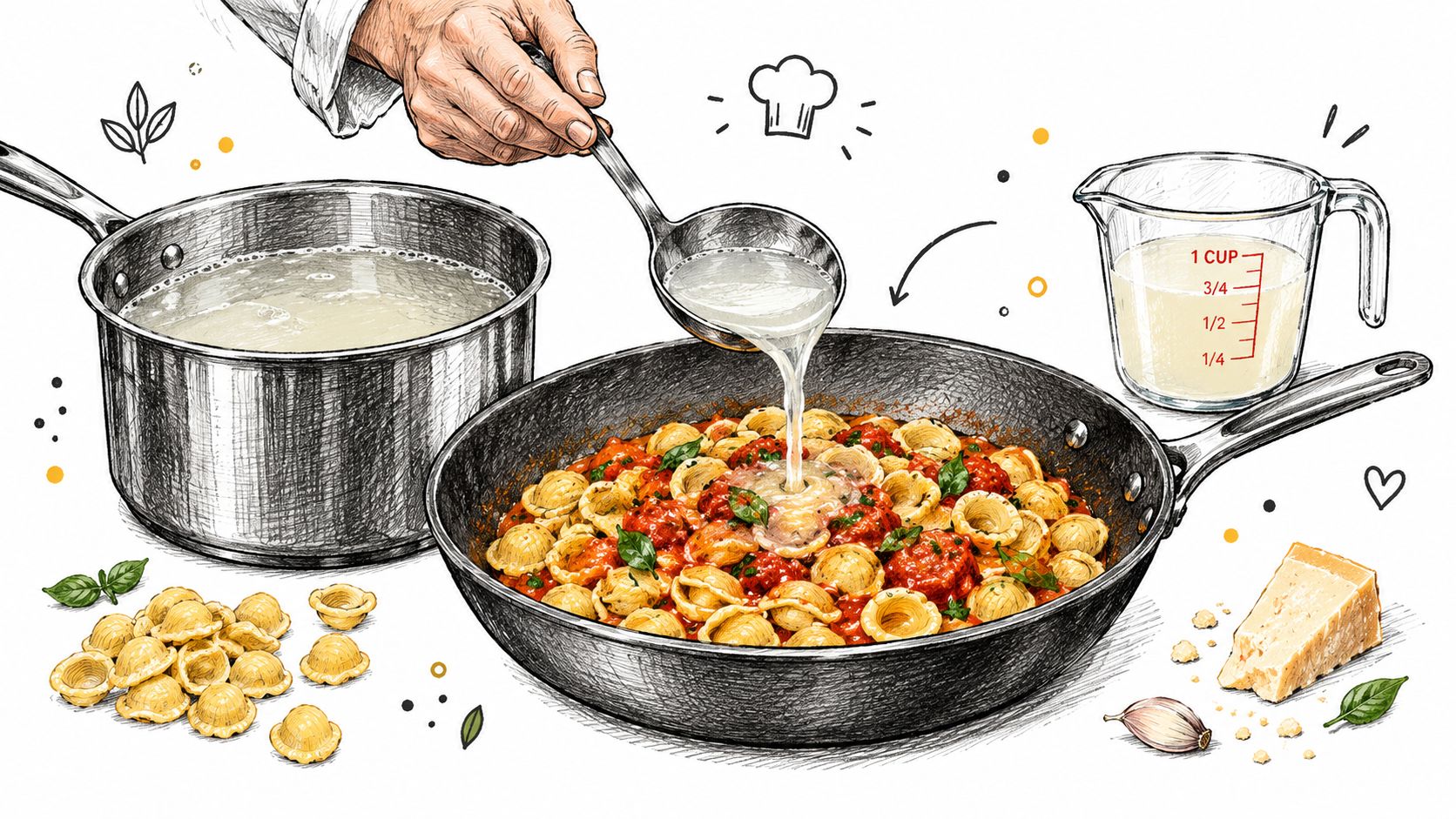
For a cheese-and-water sauce, add the liquid especially gradually and keep tossing over low heat or off direct heat. Too much starchy water can make a cheese sauce pasty rather than silky. The same principle applies to olive-oil sauces: use just enough water to help the oil and other ingredients coat the pasta.
Tossing matters because the cups need to turn through the sauce, not just sit in it. That motion distributes sauce across the rim and into the hollow center. Lello's Sicilian tuna and caper pasta recipe offers another way to think about balancing pantry ingredients with a pasta's shape.
Don't rinse the pasta after draining. Rinsing washes away surface starch that helps sauce cling, and it cools the pasta before the sauce can finish coating it.
How to Buy Dried Orecchiette Well
Two useful buying clues are surface texture and drying method. Bronze-die pasta is extruded through a textured die, which tends to leave a rougher surface; smooth-die pasta is glossier. That roughness can help sauce and small ingredients stay on the pasta instead of sliding away, especially inside the cup.
Drying also affects the final bite. Research comparing drying approaches found that higher-temperature processing generally increased cooked hardness and springiness while reducing adhesiveness and cooking loss, though the outcome depends on the raw material and the specific cycle (study of drying and cooked pasta quality). There isn't a simple rule that one temperature is always better. Poorly controlled drying can create uneven moisture, which may leave the outside and center cooking at different rates.
When a package names its extrusion or drying method, treat that as useful context, not a guarantee. At the shelf, check the pasta itself: a rough, matte surface is more likely to grip sauce than a very smooth one. If you can see through a clear window, look for pieces that seem intact rather than badly cracked or crumbled.
A practical package checklist
- Ingredients: Look for durum-wheat semolina and water if you want the traditional egg-free style.
- Origin: A clearly stated origin gives you more context about the product.
- Cooking guidance: Choose a package with a stated range, then use it as a starting point for your own doneness test.
- Surface: Check for a visibly textured finish if sauce grip matters to you.
You can compare those details with other pantry choices in Lello's guide to organic pasta. The best fit depends on how you plan to cook and serve the pasta, not on a label alone.
Storage and Quick Answers
Keep an unopened box of dried orecchiette in a cool, dark, dry pantry. Once opened, transfer it to an airtight container and keep it away from heat and light. Dry pasta is durable, but a well-sealed container helps protect it from moisture and pantry odors. For cooked leftovers, refrigerate them promptly and use them within three days. Reheat in a covered pan with a splash of water when possible, stirring gently to loosen the pasta and sauce.
For a broader guide to pantry storage choices, see Lello's advice on what to refrigerate.
Quick answers
How much dried orecchiette should I cook per person? For a main course, plan on about 100 g; for a starter, about 70 g. Adjust for appetite and for how much meat, vegetables, or other ingredients the dish includes.
Does gluten-free orecchiette cook the same way? No. It can overcook more quickly, so taste early and check the center often. Follow the package directions as a starting point, but let the bite make the final call.
Should pasta water taste salty? Yes, it should taste well seasoned. Pasta absorbs some salt as it cooks, but seasoning the water is the practical way to season the pasta itself.
The skill isn't memorizing a timer; it's tasting the rim and center until you recognize the bite you want.
For a meal built around orecchiette, Lello.Store offers Italian pasta alongside olive oils, finishing salts, preserves, and other pantry essentials. Visit to browse ingredients for a simple vegetable sauce, a dinner with friends, or your next pasta experiment.