

A pile of lemon peels can accumulate quickly after making juice, dressing, or a batch of cocktails. They still smell bright, but they're already starting to dry at the edges, and tossing them feels wasteful. Dehydrating them gives you a practical way to keep that citrus aroma for later, as long as you choose suitable fruit, dry the peel thoroughly, and store it well.
The process isn't just “bake it low and slow.” Peel thickness, drying method, and temperature affect the finished color and flavor, while moisture left inside can spoil a batch in storage. It's also worth remembering that dehydration preserves peel, but it doesn't reliably remove pesticide residues. Here's how to make dried lemon peel that suits your kitchen and the way you plan to use it.
Table of Contents
- Why Dehydrated Lemon Peel Belongs in Your Pantry
- Choosing and Prepping Your Lemons
- Four Methods for Drying Lemon Peel at Home
- How to Know the Peel Is Truly Dry
- Storing Dehydrated Lemon Peel So It Lasts
- Cocktail, Baking, and Cooking Ideas
- Troubleshooting and a Quick Reference Checklist
Why Dehydrated Lemon Peel Belongs in Your Pantry
A recipe calls for lemon zest and the fruit bowl is empty. A jar of dried peel on the shelf fixes that in about a minute. It won't behave exactly like fresh zest: drying changes the texture and aroma, and the pieces need a little time in liquid to soften and release their flavor. The concentrated citrus character still earns its shelf space, and it works in tea, baking, seasoning, and drinks long after the last fresh lemon is gone.
There's a larger resource story behind this kitchen habit. Lemon-processing residues, including peel, seeds, and pomace, typically account for about 45–55% of the original fruit mass, while one estimate puts peel alone at 50–55% of total fruit mass in juice production (a review of citrus-processing by-products). Those figures describe processing residue, not the amount of dried peel you'll pull from a home batch. What they do show is that peel makes up the bulk of what gets left behind, which turns saving it into a sensible habit rather than a fussy one.

A different ingredient from fresh zest
Fresh zest gives a vivid burst that fades fast. Dried peel suits jobs where citrus should sit in a mixture, steep into a drink, or wait in the pantry until you need it. I grind it fine for seasoning blends and keep some in wider strips for syrups and cocktails. The peel contains functional compounds such as polyphenols, flavonoids, essential-oil constituents, and pectin-related materials, and drying changes how much of them survives, a point the processing review cited above covers in detail.
How hot you run the drying and how carefully you prep the fruit decide whether a batch tastes bright or flat. The method matters as much as the habit.
For a quick citrus finish at the table, lemon-infused finishing salt is another route to that bright flavor, as in Les Terres Blanches Fior di Sale Limone Sicilian Lemon Sea Salt. Whether you dry peel yourself or reach for a ready-made seasoning, start with one small pinch or piece, taste, and adjust. Dried peel is assertive, and it's easier to add more than to take it back out.
Choosing and Prepping Your Lemons
Choose lemons with clean, sound skin and a strong citrus aroma. If you plan to eat the peel, sourcing matters: a study of fungicide residues found that processing reduced residues in lemon flesh, juice, and jam, but residues increased in peel and grated frozen peel. Dehydration shouldn't be treated as a way to remove contaminants (the study on fungicide residues in lemon products).
Organic certification and careful washing are useful parts of a sourcing decision, but neither makes it sensible to assume that peel needs no preparation. Follow local food-labeling and pesticide guidance. Wash lemons under running water and scrub the skin with a clean produce brush, then dry them before peeling. Washing can remove dirt and some surface material, but don't treat it as a guarantee that all residues are gone.
Pick the peel shape for the job
For zest-only peel, use a microplane and take just the colored outer layer. It dries quickly and gives a fine texture for baking or seasoning, but it's easy to overdo the zesting and include pith. For strips, use a vegetable peeler and aim for pieces of consistent thickness. Keep the white pith thin if you want less bitterness and a lighter, more delicate texture.
Whole-peel products and zest-only preparations aren't interchangeable. The pith adds bulk and chew, and it can make the finished peel taste more bitter. If you want decorative garnishes, quartering or slicing lemons gives you larger pieces, but thick pieces take longer to dry than thin strips. Thicker-skinned Eureka lemons may yield more substantial strips, while thin-skinned Meyer lemons can be more delicate to peel and handle. Whichever variety you choose, keep pieces as uniform as you can so some don't become brittle while others remain damp.
Use peel from lemons you'd be comfortable eating. For another way to put lemon flavor to work, try it in lemon-herb aioli.
Four Methods for Drying Lemon Peel at Home
Every drying method trades time, heat, and flavor against each other, and after a few batches it becomes clear that the best method is the one matching your equipment and your patience. Research backs this up. One comparative study found that freeze-drying retained the most phenolics, ascorbic acid, and carotenoids among its tested methods, while hot-air drying kept the most total volatile compounds and microwave drying detected the greatest number of them (the comparative drying study). No method wins on every measure, which is why I pick based on batch size and how much attention I can give it.
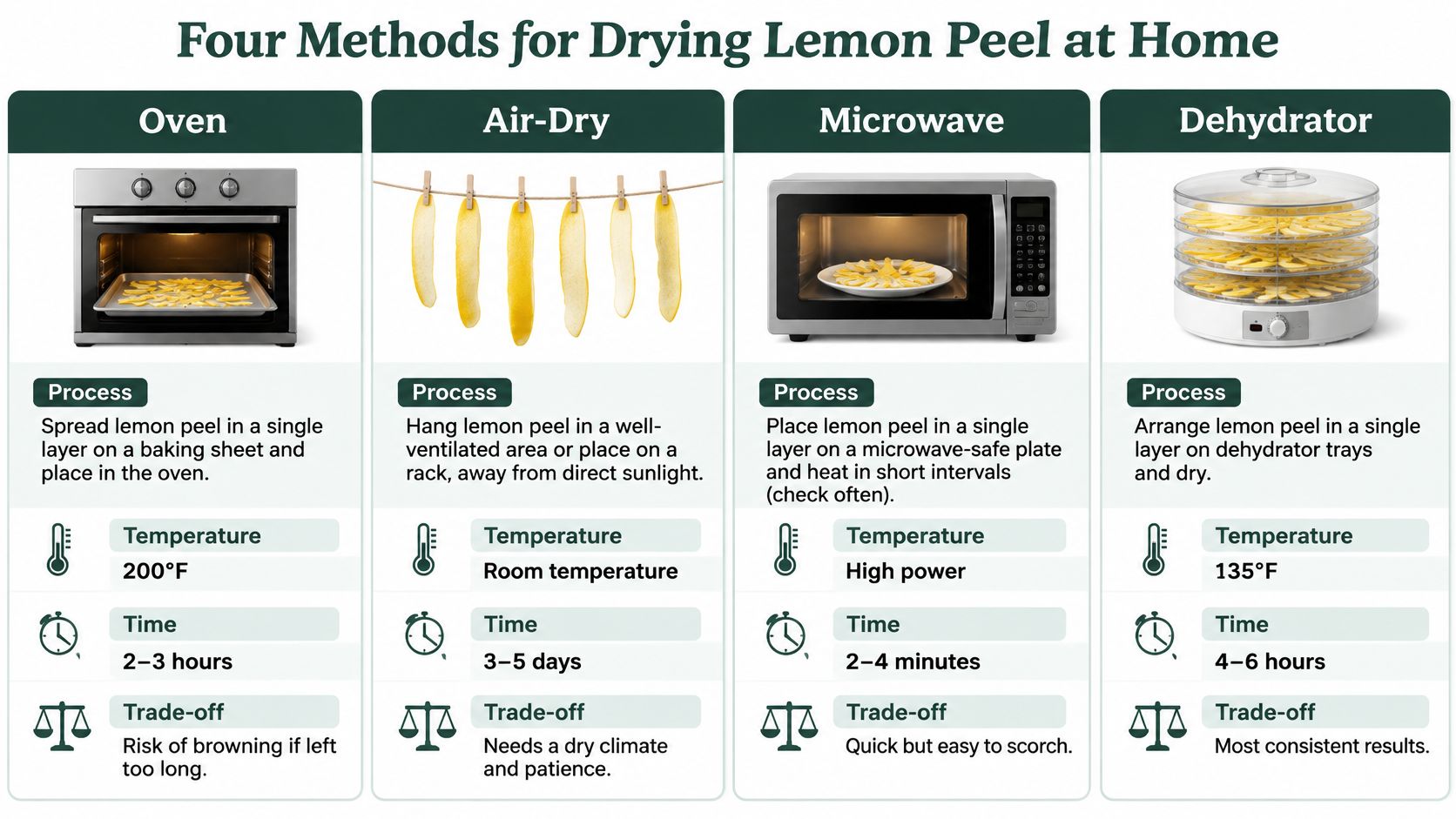
Compare the options
| Method | Temperature | Approximate time | Best for | Trade-off |
|---|---|---|---|---|
| Oven | Use a low setting; research supports about 50°C for retention of several measured compounds (study of air-drying conditions) | Check and dry until brittle | A straightforward option with common kitchen equipment | Needs monitoring; uneven pieces finish at different times |
| Air-dry | Room conditions | Several days or longer, depending on the environment | Small batches and a patient cook | Humid conditions make dependable drying harder |
| Microwave | Power and time need careful calibration | Short bursts, checked frequently | A small batch when speed matters | Easy to scorch, with a risk of uneven moisture removal |
| Dehydrator | Follow the appliance guidance | Check periodically until brittle | Hands-off, even drying | Requires a dedicated appliance |
For a practical hot-air approach, peel the lemons in uniform strips and arrange them in a single layer on a lined tray. Run the oven at its lowest reliable setting, around 50°C if yours goes that low. The air-drying study cited in the table above found stronger retention of several measured compounds at the lower end of its tested temperatures, so there is a real reason to favor gentle heat when your oven allows it.
Here is the honest trade-off most guides skip: many home ovens will not hold a temperature that low, and their "warm" setting often runs hotter than the dial suggests. An inexpensive oven thermometer tells you what you are working with, and propping the door ajar drops the temperature while letting steam escape. Lower heat keeps color and aroma brighter. Higher heat dries faster but flattens flavor.
Microwave drying is fast but twitchy. Work in short bursts and check between each one, because thin zest scorches well before thick strips finish drying. Air-drying asks for patience and a thoroughly dry room; in humid weather it stalls, and peel can spoil before it ever gets crisp. A dehydrator is the most forgiving choice for bigger batches, since it holds a steady low temperature without supervision. The same patience-and-airflow logic applies when preserving other produce, as in this guide to semi-sun-dried tomatoes. Whichever method you pick, keep pieces small and even, and watch the peel rather than trusting a timer.
How to Know the Peel Is Truly Dry
A piece can feel dry on the surface and still hold moisture inside. That's why the useful test isn't just how the peel feels as soon as it leaves the oven. Let it cool in a dry place first, then bend or snap a piece. Fully dried strips should feel crisp and break cleanly; chewy, rubbery, or tacky pieces need more drying.
Practical rule: Cool a test piece before deciding the batch is finished. Warm peel can seem drier than it is, and sealing it while warm can create condensation.
An oven-drying study reported 12.35% moisture and water activity of 0.63 after three hours at 60°C, but that result is not a universal shelf-stability specification (the lemon-peel drying study). Peel thickness, packaging, storage humidity, and sugar content all affect how a finished batch behaves. If you have a water-activity meter, test cooled peel rather than using brittleness as your only measurement. Don't assume a single moisture figure is a guarantee that every batch can be stored safely.
Color and texture can also tell you what happened during drying. A browned batch may have been exposed to too much heat or left in too long; research comparing air-drying temperatures found that extractable phenolic-acid retention declined as temperature rose, and that drying at 50°C retained 95.0%, compared with 63.8% at 90°C (the air-drying comparison). Those figures describe measured compounds, not a promise about the taste or color of every home batch. Use low heat and check regularly rather than chasing speed at the expense of aroma and appearance.
Storing Dehydrated Lemon Peel So It Lasts
A batch can be perfectly dried on Friday and ruined by Monday if you seal it too soon. Storage starts only after the peel has cooled completely, because warm strips release moisture into a closed jar and that condensation undoes hours of drying. I lost a batch this way once; the inside of the jar fogged overnight and the peel went soft again.
Keep strips whole for storage and grind only what you need. Powder exposes far more surface area, so its aroma fades faster than intact peel.
A clean glass jar with a tight lid is the easiest option: reusable, cheap, and clear enough to check the contents at a glance. Keep it in a cool, dark cupboard away from the stove, where heat and steam work against you. An opaque airtight pouch helps if light is hard to avoid, and a freezer-safe bag suits longer storage. Press out the excess air before sealing.
Keep moisture out
In a humid kitchen, a food-safe desiccant packet inside the jar helps hold moisture down. It cannot rescue peel that went in flexible or damp, so treat it as backup for a properly dried batch. Check the jar every few weeks for condensation, fading aroma, discoloration, or mold. If you spot mold or catch a musty smell, discard the whole batch rather than sorting around the bad pieces.
No jar keeps flavor forever. For a wider look at how different pantry goods handle storage, see The Pantry Has Rules, What to Refrigerate. The practical test is the smell when you open the lid: if the citrus fragrance is still there, the peel will earn its place in a recipe. If it has gone flat, use it where lemon plays a background note, or dry a fresh batch.
Cocktail, Baking, and Cooking Ideas
A strip of dried lemon peel can be a quiet helper at the bar. Drop one into an old fashioned, steep a piece in simple syrup, or crush a little peel with salt to rim a gin and tonic glass. For a syrup, let the peel infuse, taste as it goes, and strain it when the citrus comes through clearly. Dried peel can take longer to release flavor than fresh zest, so give it time rather than adding a large amount at once.
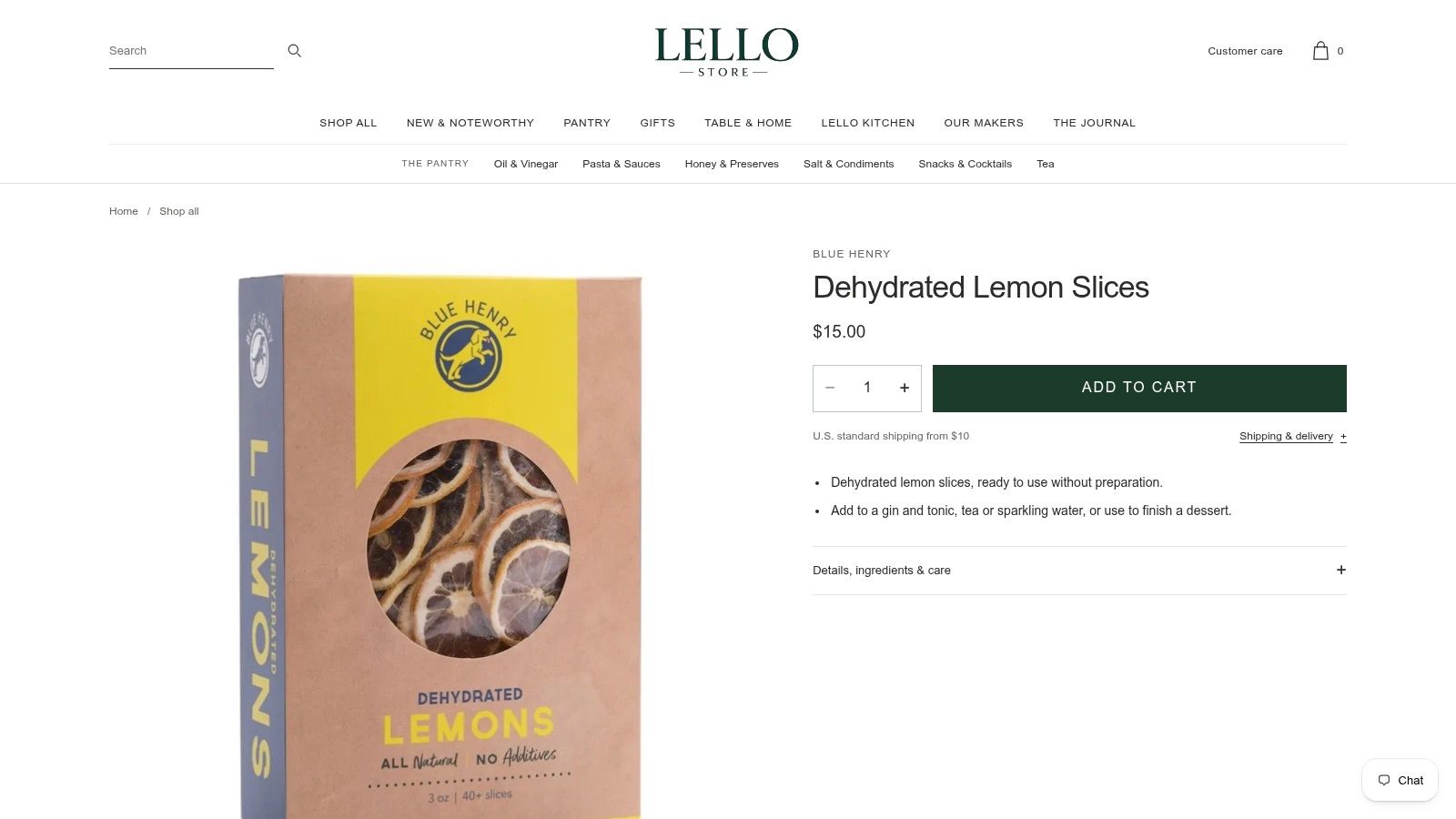
If you want a ready-to-use garnish for a drink or dessert, Dehydrated Lemon Slices can be dropped into a gin and tonic, tea, or sparkling water, or used to finish a dessert without any prep. That's a different format from homemade peel strips: slices are a visible garnish, while strips and powder are easier to work into syrups, doughs, and seasonings.
Put the pieces to work
For baking, finely grind dried peel and begin with a teaspoon in a loaf of lemon-poppy bread, adjusting to taste on your next bake. You can also rub a small amount into sugar and sprinkle it over sugar cookies before baking for a citrus aroma. The powdered form spreads through a batter more evenly than strips, which can stay chewy or gather in one bite. If you're making a lemon-forward cake, follow a recipe such as lemon olive oil cake and treat dried peel as an addition, not a substitute for ingredients the recipe needs for moisture or acidity.
In savory cooking, crumble peel into finishing salt, add a little to fish seasoning, or steep a strip in oil for a quick citrus infusion. Taste the oil as it infuses, and remove the peel when the flavor is where you want it. The same approach works in tea: add a piece to a cup, let it steep, and pull it out before bitterness overtakes the aroma.
For a ready-made citrus finish alongside a homemade batch, this short video offers another way to think about lemon flavor in the kitchen.
Keep strips for infusions, torn pieces for drinks, and powder for even seasoning. That small bit of sorting makes it easier to grab the right texture when you're cooking.
Troubleshooting and a Quick Reference Checklist
Chewy peel usually needs more drying. Browned peel points to too much heat or too long in the oven, so reduce the heat or check the batch sooner next time. If the aroma fades quickly, use an airtight container away from light and grind only what you need. Mold means the peel wasn't dry enough or moisture got into storage; discard it and clean the container before using it again.
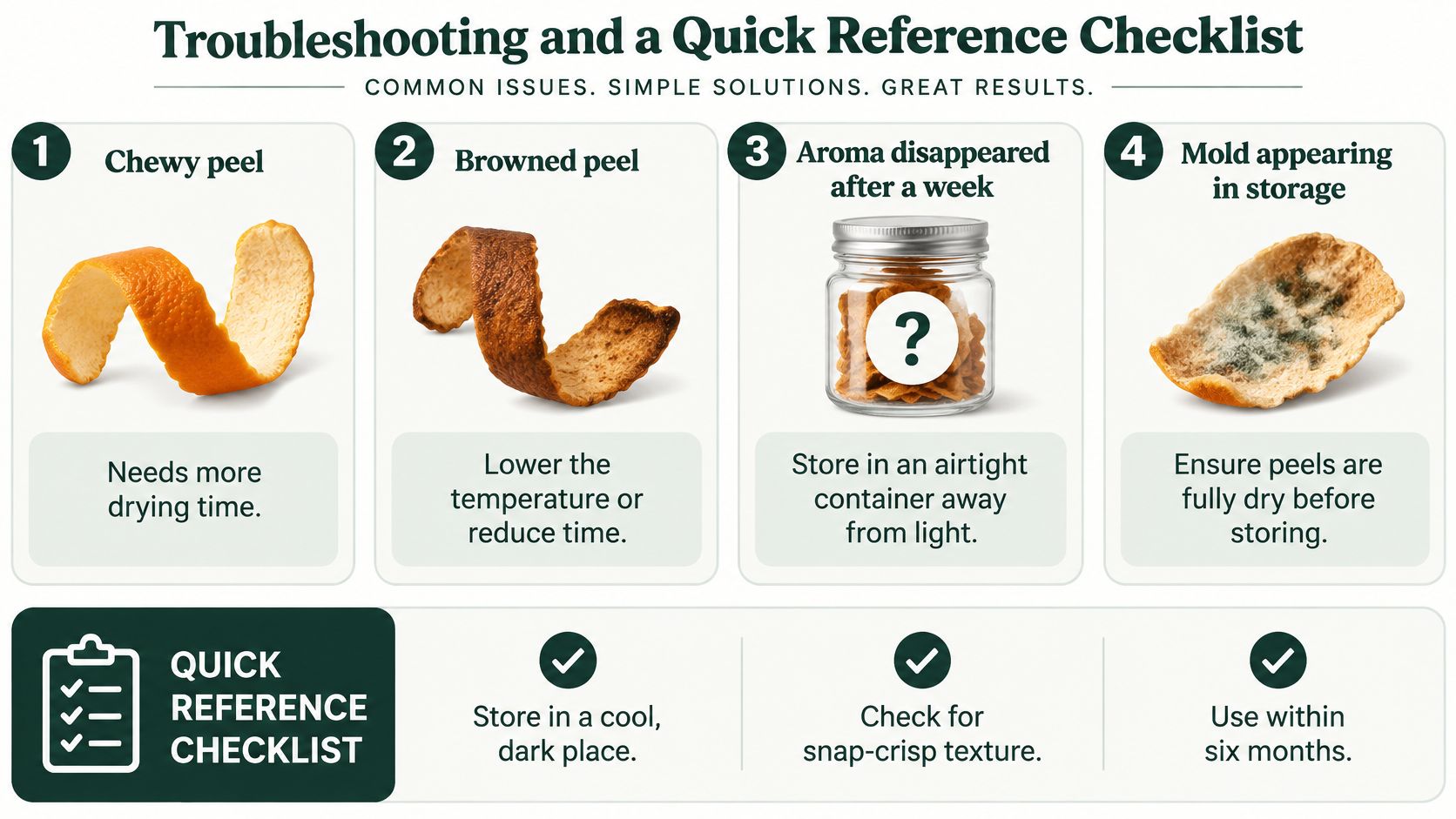
Quick reference: Wash and dry lemons. Cut even pieces. Dry gently until brittle. Cool completely. Seal away from heat, light, and moisture. Check stored peel before using it.
Lello.Store curates specialty pantry foods and cocktail garnishes, including ready-to-use dehydrated citrus for drinks and desserts. If you're stocking a home bar or looking for pantry ideas to use alongside homemade peel, visit Lello.Store.