

Why can two jars labeled “green olives” taste so different, even when both look like the same kind of snack? The answer isn't just the olive variety. Processing, packing liquid, and harvest timing all shape flavor and texture, so the best jar is the one that suits how you plan to serve it, not a universal winner.
For olives in a jar, start by matching the style to the occasion. Then check the label for clues about curing and brine, and handle the jar properly after opening. Those steps make it easier to choose confidently, whether you're setting out an aperitivo board, mixing a martini, or cooking dinner.
Table of Contents
- Jarred Olive Types and Where Each Works
- What Brine and Processing Do to Flavor
- Why Jar Origins and Prices Shift Between Harvests
- How to Store an Opened Jar Safely
- Serving Jarred Olives on Boards, in Cocktails and Recipes
- Choosing a Jar by Use Case and Checking It
Jarred Olive Types and Where Each Works
Olive style affects how a jar works in a dish. Use this table to compare flavors and textures, then choose by occasion.
| Style | Flavor and texture | Best use |
|---|---|---|
| Spanish-style green (Manzanilla) | Firm, crisp, mildly salty, lye-cured then brined | Boards, martinis, snacking |
| Greek-style Kalamata | Soft, fruity, tangy, brined or packed in wine vinegar | Salads, pasta, grain bowls |
| Ripe black, California-style | Mild, soft, buttery, often canned | Pizza, cooking, everyday snacking |
| Cracked green | Split skin, herb- and citrus-seasoned, salty | Mezze plates, casual snacking |
| Castelvetrano | Bright green, buttery, mild | Eating whole at aperitivo |
| Stuffed olives (pimento, blue cheese) | Mild olive with a bold filling | Cocktail garnish, cheese boards |
Color offers a clue to style, while processing also shapes the result. Green olives are often bright and firm; ripe black olives can be gentler and softer. Either can suit the dish.
Match texture to the job
Firm olives are easy to pick up from a board and keep a distinct bite in salads or cocktails. Soft olives are easier to chop, mash, or fold into warm food. Choose whole, firm olives when you want them to stand out; pitted or softer ones are convenient for sauces and spreads.
Stuffed olives bring their own seasoning. Pimento adds a familiar sweet-pepper note, while blue cheese gives a sharper, creamier bite. Lello's choice of blue cheese-stuffed olives shows how that pairing can work for cocktails and boards.
What Brine and Processing Do to Flavor
Olives start out intensely bitter, so producers treat them to make them ready to eat. They then preserve the fruit through fermentation, heat treatment, or another method suited to storage. The Codex standard for table olives describes these approaches.
Salt brine changes the conditions around the olives, while fermentation or added acid contributes acidity. Some products also receive heat treatment. In a common processing approach, brines begin around 8–10% salt, according to the Codex standard for table olives. During fermentation, olive sugars become lactic and acetic acids, lowering the pH, a measure of acidity.
Those choices shape taste and texture. Fermented green olives can finish near pH 4, while California-style olives may remain much less acidic, with finished pH values around 5.8–7.9, according to the University of California's olive-processing guidance. Salt and acidity help limit spoilage, but they are only part of preservation; processing and storage instructions still matter.
Read the label for useful clues
Check the processing style and whether vinegar or lactic acid is listed. Salt information, packing liquid, whether the olives are whole or pitted, and the best-by date can also help you choose. Packing liquid may be salty, tangy, or vinegary, and its flavor can carry into a drink or recipe.
“Ripe” or “California-style” often signals a mild, soft olive, while “fermented” or “Spanish-style” often suggests a firmer, saltier profile. These are clues, not guarantees: recipes and processing vary, and a jar's taste can shift between harvests. Match the style to the occasion rather than treating one as better. For a dirty martini, Lello's guide to choosing dirty martini juice explains how the packing liquid affects the drink's olive flavor.
Why Jar Origins and Prices Shift Between Harvests
Why might a familiar jar become harder to find or cost more? Olive harvests fluctuate, and those changes affect how much producers can supply. The International Olive Council's table-olive statistics report global production of 3,316,500 tonnes in the 2024/25 crop year, up 19% from the previous year, and project approximately 2,986,000 tonnes in 2025/26, about 10% lower. Egypt accounted for 18% of world production in 2024/25, although its output fell 20% that year.
Harvest conditions influence supply, while processing shapes the olives' flavor and texture. A smaller crop can limit availability, and reduced supply can put upward pressure on prices as products move through the supply chain to store shelves. The effect varies by producer and product. A familiar style may also taste or feel somewhat different from year to year.
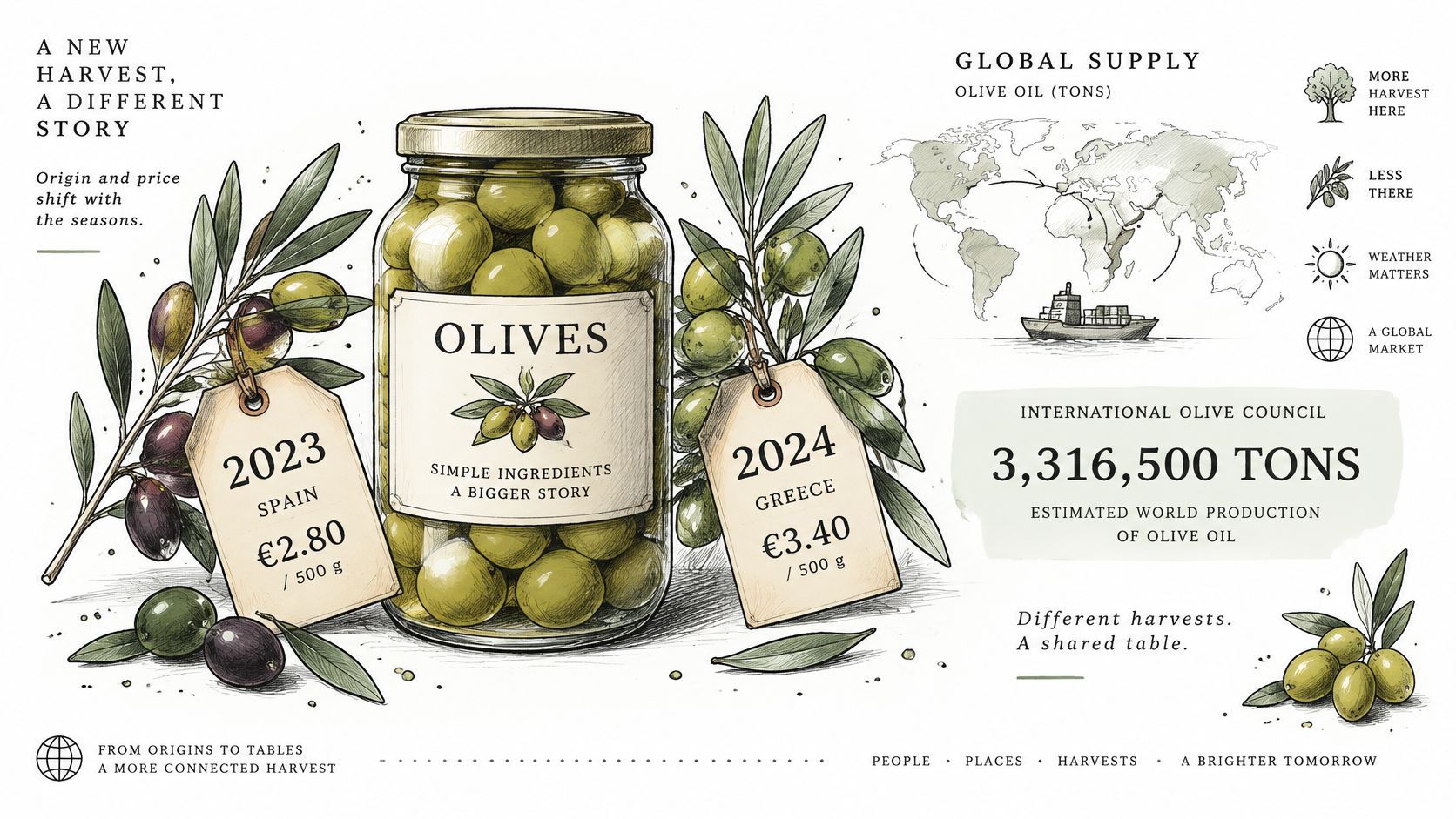
The IOC's crop-year figures and calendar-year retail stock describe different periods. A shop's supply may include olives from an earlier harvest, current shipments, and a producer's existing inventory.
When your preferred origin is unavailable, choose by style and use. A firm, brined green olive suits a board or martini; a softer, milder olive can work well in cooking. Harvest timing, brine, and processing help set a jar's character, so match it to the occasion rather than ranking origins as better or worse. Keeping two jars of the same broad style in rotation can also make a temporary shortage less disruptive to a recipe.
How to Store an Opened Jar Safely
Once opened, jarred olives need careful handling. Keep them in their original liquid and follow the label's storage instructions and any guidance on how long to use the olives after opening. Salt and acidity help preserve olives, but salt alone does not ensure safety. The FDA's guidance on water activity and microbial growth explains why a commercially processed, sealed jar needs different care once opened.
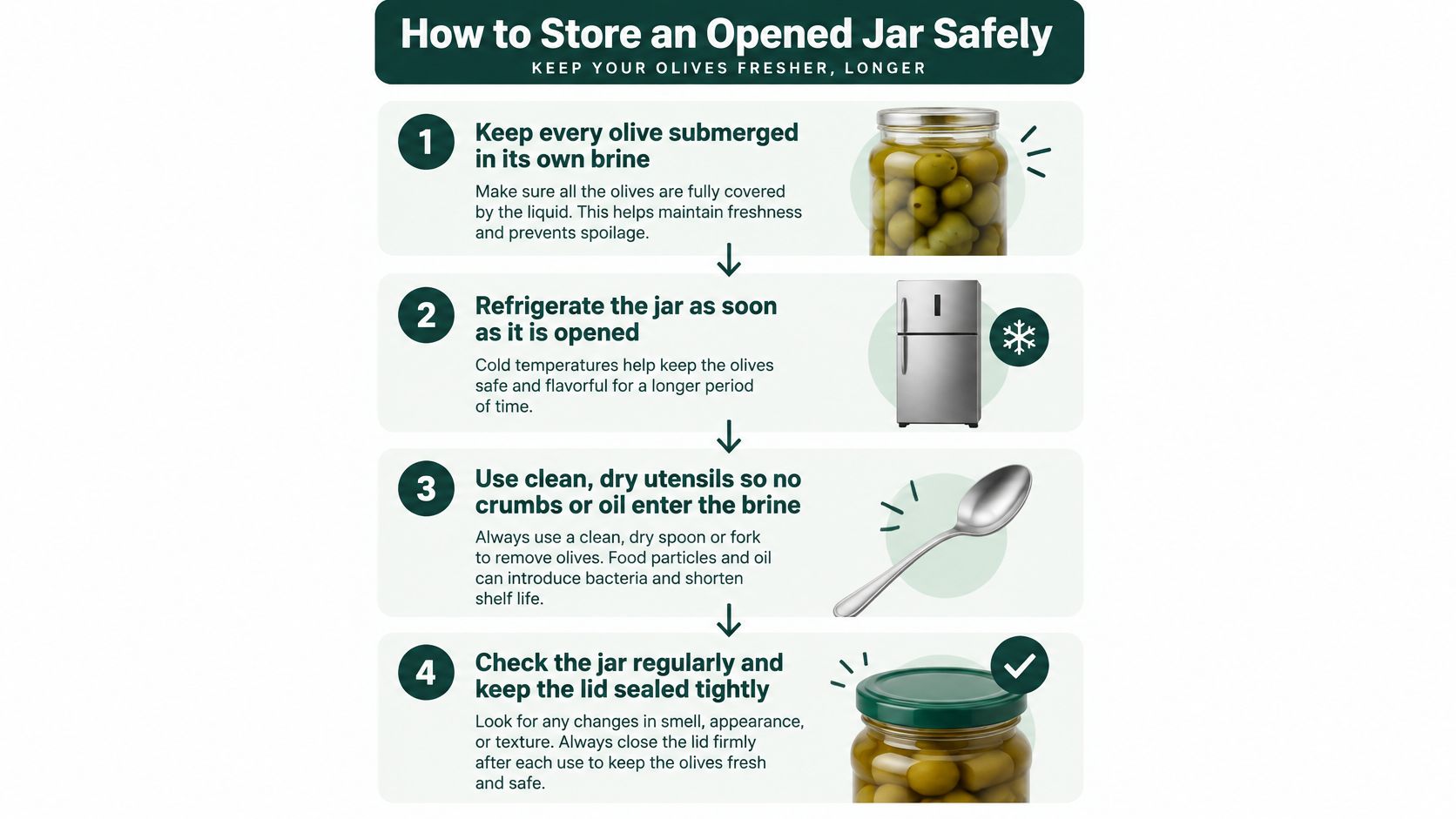
Use this routine after opening:
- Keep the olives submerged in their own brine. Liquid limits their exposure to air, which can encourage surface mold.
- Refrigerate the jar promptly. Don't leave it on the counter after serving.
- Use a clean, dry utensil. Crumbs and oil can contaminate the packing liquid, so take out only what you need.
- Don't top it up with plain oil or weak brine. A home mixture won't restore the product's original conditions.
- Lift olives out with a spoon. Pouring off liquid makes it harder to keep the remaining fruit submerged.
- Check before serving. Look for changes in the olives or liquid, and notice any unexpected smell, texture, or pressure.
Know when to discard the jar
Discard olives if the lid bulges, liquid spurts out, the jar shows fermentation pressure, the product smells off, or you see visible mold. Don't taste-test a suspicious jar. Appearance and smell cannot establish whether questionable olives are safe. For more pantry-storage guidance, read what to refrigerate in the pantry.
Rinsing can reduce surface salt, but it also removes some protective brine. If you rinse olives, refrigerate them and use them promptly rather than returning them to the jar as though the original packing conditions were unchanged.
If a jar arrives broken or leaking, don't consume or use the product. Contact lello@lello.store, preferably within 48 hours after delivery. Many Lello.Store products come in glass, ceramic, metal, or other materials that need special handling.
Serving Jarred Olives on Boards, in Cocktails and Recipes
Drain olives when you don't want brine on the plate. Save a little when its salty, savory flavor can contribute to a drink or sauce. The same jar can suit different dishes because the fruit and its packing liquid play separate roles.
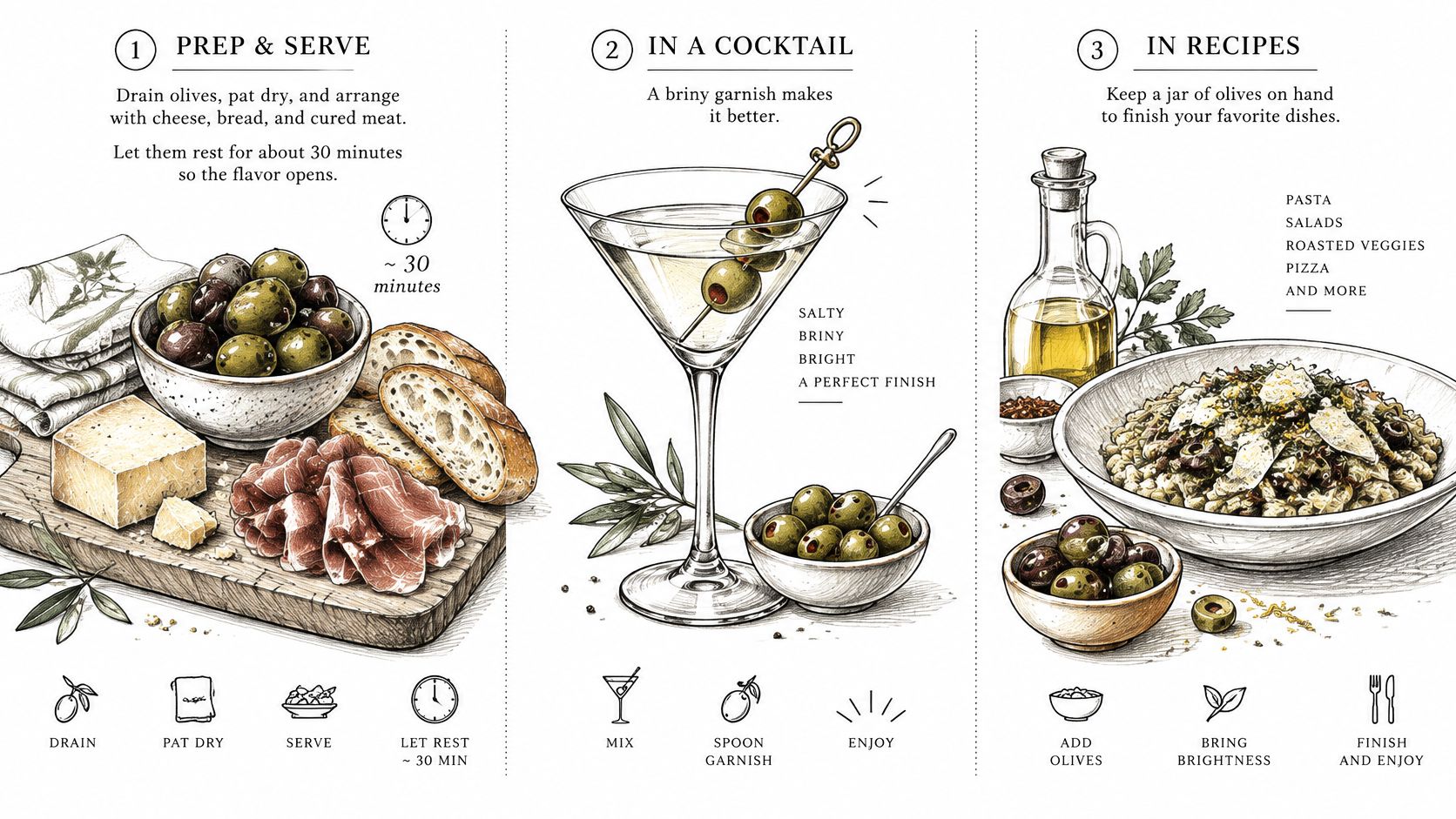
Set a board
Drain the olives and pat them dry to keep brine off the cheese and bread. Let them sit until closer to room temperature, about 30 minutes, so their aroma can open up. Firm olives pair well with hard cheese, bread, and cured meat; softer or stuffed olives offer a different texture in each bite. For ideas on arranging the rest of the table, see Lello's guide to building an elegant aperitivo.
Mix a martini
For a dirty martini, chill the glass and thread firm green olives onto a cocktail pick. Add a small amount of brine, taste, then adjust the drink to your preferred savory-salty balance. A cheese-stuffed queen olive can work as both garnish and a substantial bite. If you prefer a separate mixer to the jar's packing liquid, Dirty Martini Juice can be added gradually to gin or vodka.
Cook with a light touch
Add pitted olives near the end of cooking to help them retain their texture. For tapenade, drain and rinse a very salty olive, then taste before adding more salt. Chop Kalamata olives with lemon, garlic, and olive oil for a quick pasta finish. In salads, slice firm olives just before serving to limit color bleeding into other ingredients.
Brine is an ingredient, too. Use it deliberately in a drink or sauce, and drain the olives when its flavor would overpower the dish.
Choosing a Jar by Use Case and Checking It
Choose for the occasion first. Then check the label for salt level and consider whether you'll use the packing liquid. The table below can help narrow the choice; for texture guidance, see the earlier section on jarred olive types.
| Use | What to look for | Why it works |
|---|---|---|
| Cheese board | Firm, pitted or stuffed, drained well | Holds shape and pairs with cheese |
| Dirty martini | Firm green olives with a clean, dedicated brine | Brine adds salt and flavor to the drink |
| Cooking, tapenade, sauces | Pitted, soft or sliced, brine-packed | Softens and blends into the dish |
| Lower-sodium snacking | Labeled reduced sodium, rinsed before serving | Helps limit added salt |
| Gift or table presentation | Whole, large, visually even, in a clear jar | Makes the olives visible before opening |
For guests watching their sodium, look for a reduced-sodium label and check the nutrition information. For a delicate recipe, a lightly brined olive can leave more room for the other flavors. If the jar will sit out during a gathering, follow the storage guidance for opened olives.
Ask three questions before buying
What's the occasion? A cocktail garnish, board, and cooking ingredient call for different styles. How salty can it be? Check the label and decide whether the packing liquid will go into a drink or dish, or be drained away. Will the brine be part of the recipe? A dedicated olive brine can season a dirty martini; in other dishes, taste first and add salt gradually.
When your order arrives, check the jar and packaging for damage before use. If anything is leaking or broken, do not consume or use the product. Contact lello@lello.store, preferably within 48 hours after delivery. Browse the Lello.Store pantry to compare styles, or try dirty-martini pasta with blue cheese olives for a recipe that brings cocktail-inspired flavors into cooking.
Keeping two jars in rotation can make choosing easier: one for serving and one for cooking. Select each for its intended use, then refrigerate both after opening.
Explore Lello.Store for specialty pantry foods, cocktail garnishes, and practical guides to choosing ingredients for aperitivo, cooking, or gifting. Match a jar to the occasion, and let its flavor and brine guide how you serve it.